
14 October 2026
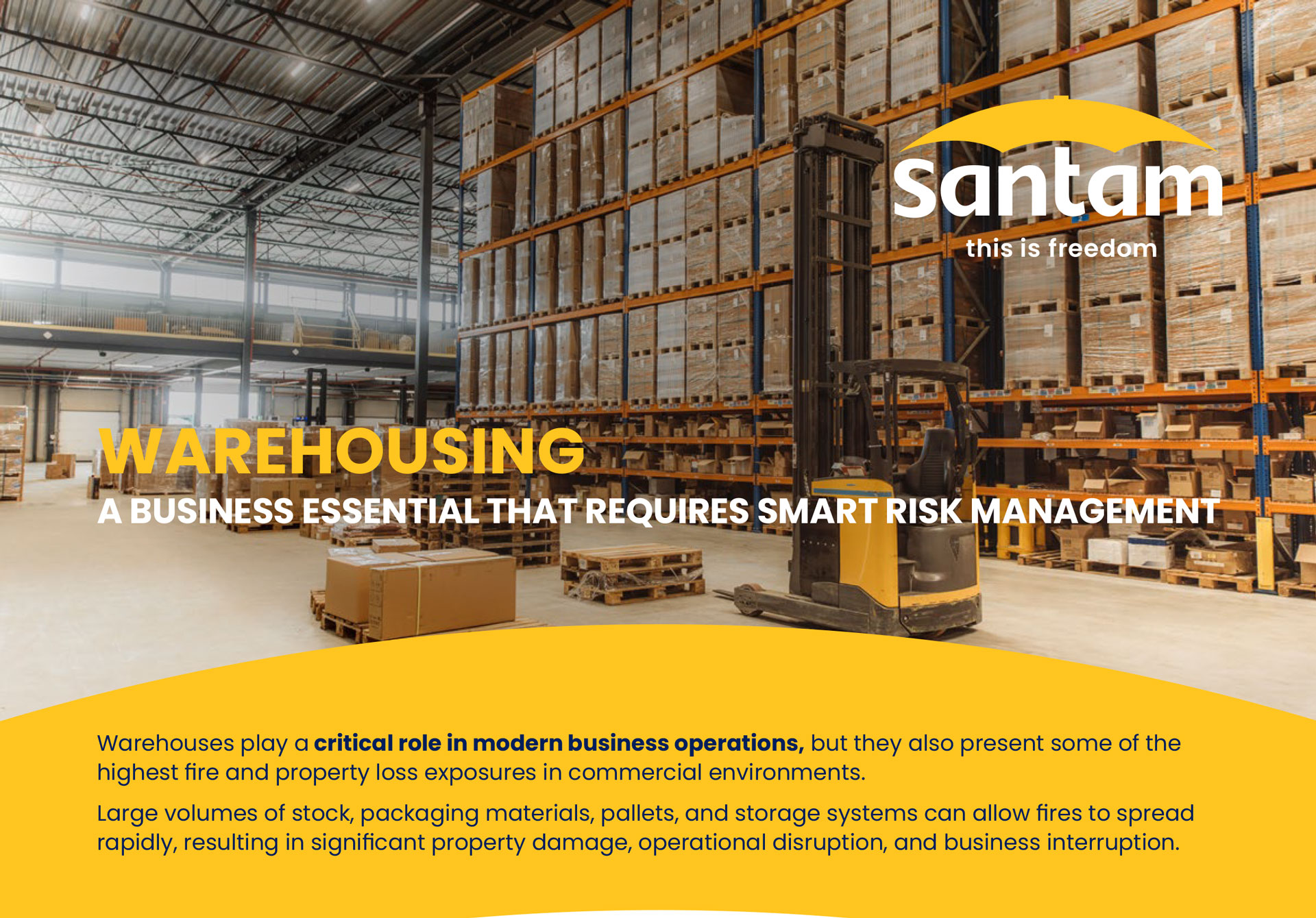
Warehouses play a critical role in modern business operations, but they also present some of the highest fire and property loss exposures in commercial environments.
Large volumes of stock, packaging materials, pallets, and storage systems can allow fires to spread rapidly, resulting in significant property damage, operational disruption, and business interruption.
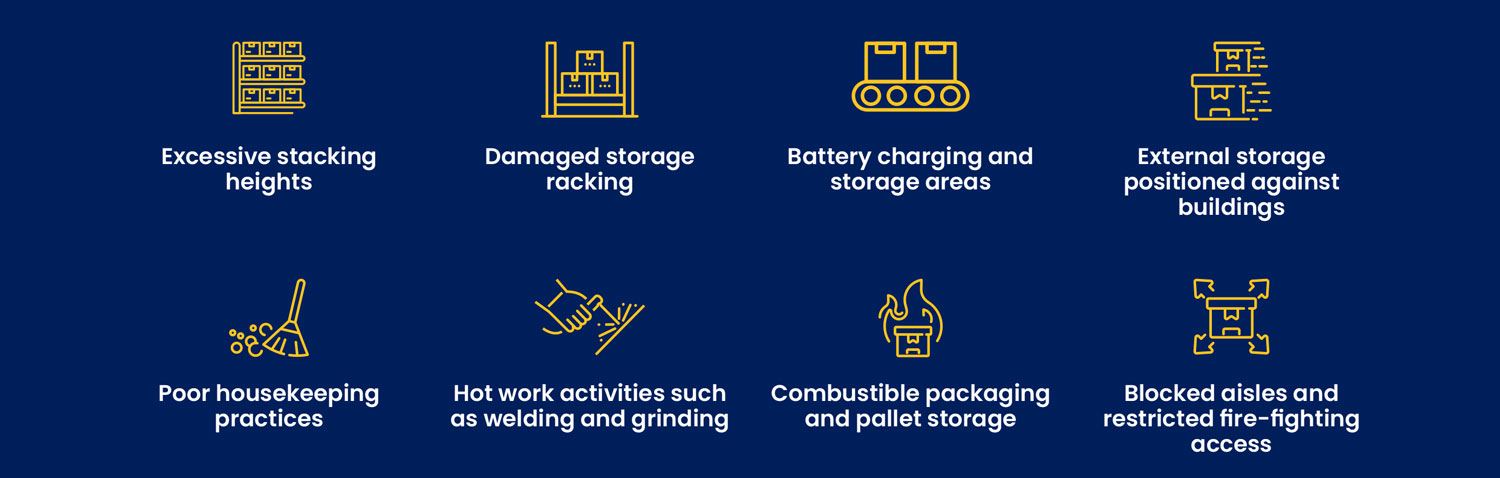
Common warehouse exposures
High-risk exposures typically include:
What good warehouse risk management looks like
Effective warehouse risk management is built on consistent controls and good operational discipline.
Pallet storage
RISKY PRACTICE
Excessive pallet storage inside the building
- Increases combustible fire load
- Can contribute to rapid fire spread
- May obstruct operations, emergency exits, and fire-fighting access
BETTER PRACTICE
Pallets stored in a designated area away from the building
- Reduces combustible loading within the warehouse
- Improves housekeeping standards
- Limits fire exposure to the main building
Racking integrity
RISKY PRACTICE
Damaged racking left in service after vehicle impact
- Vehicle impacts can weaken structural integrity
- Damage may not always be immediately visible
- Increases the risk of stock loss, collapse, and injury
BETTER PRACTICE
Damaged racking identified, reported, and repaired promptly
- Damaged sections are identified early
- Maintains structural stability and load capacity
- Reduces the risk of collapse and operational disruption
Battery charging areas
RISKY PRACTICE
Poorly managed battery charging and power system areas
- Charging near combustible materials
• Inadequate ventilation - Poor housekeeping around charging stations
- Use of damaged batteries or non-approved chargers
BETTER PRACTICE
Controlled charging areas with appropriate safety measures
- Adequate ventilation
- Separation from combustible materials
- Good housekeeping standards
- Use of approved charging equipment only
- Regular inspection and maintenance
- Ensuring fire-fighting equipment remains accessible
- Maintaining fire detection and alarm systems
- Managing battery charging areas safely
Small improvements can make a significant difference to loss outcomes, such as:
- Maintaining high housekeeping standards
- Keeping aisles clear and unobstructed
- Managing and controlling stacking heights
- Protecting and regularly inspecting racking systems
- Ensuring fire-fighting equipment remains accessible
- Maintaining fire detection and alarm systems
- Managing battery charging areas safely
- Implementing hot work permit procedures
- Keeping external storage away from buildings where possible
QUICK DAILY CHECK
Before the end of the day, ask yourself:
- Are aisles clear and unobstructed?
- Is any racking damaged or overdue for inspection?
- Are pallets and packaging materials accumulating unnecessarily?
- Are batteries being charged safely and in designated areas?
- Is fire-fighting equipment accessible and clearly visible?
Your Broker: A Partner in Risk
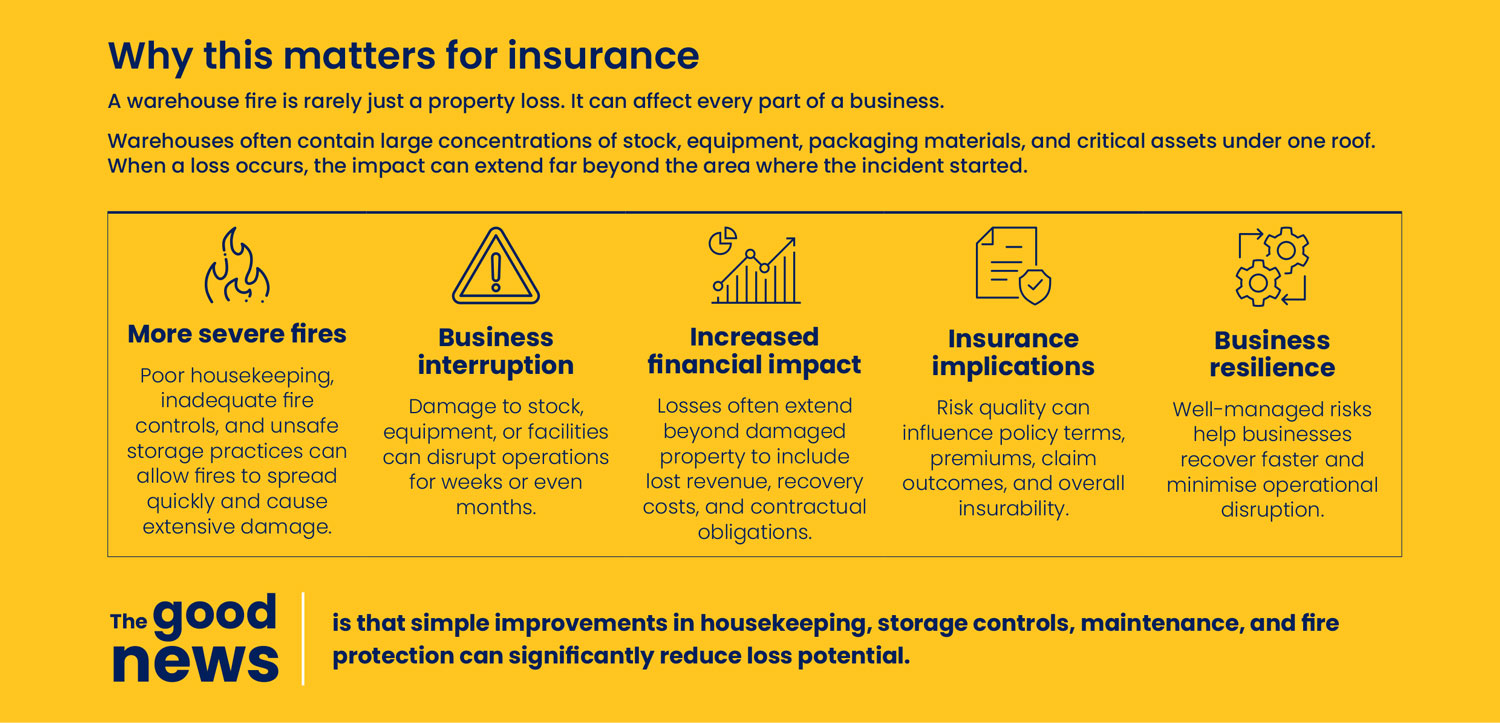
Warehousing risks are part of everyday business operations, but significant losses don’t have to be.
Your broker plays an important role in helping you identify, assess, and manage warehousing risks before they result in incidents or claims.
The goal is not to limit your operations, but to help ensure your business remains safe, operational, insurable, and resilient
Together with your broker, you can stay protected today and as your business
continues to grow and evolve.
Source: www.santam.co.za
_
Contact your Zululand Insurance Broker today!